The Department of Transportation on Tuesday announced that regulators are moving toward enabling civilian supersonic flights over the continental U.S., which have been banned for decades due to sonic booms.
The Federal Aviation Administration (FAA) proposed a rule that sets a noise-based certification standard for supersonic aircraft and signaled that it will propose another rule later this year covering landing and takeoff noise standards for supersonic aircraft.
Taken together, the FAA's regulatory moves will give guidance to aircraft manufacturers so they can finalize designs and bring civilian aircraft capable of flying at supersonic speeds into service for travelers.
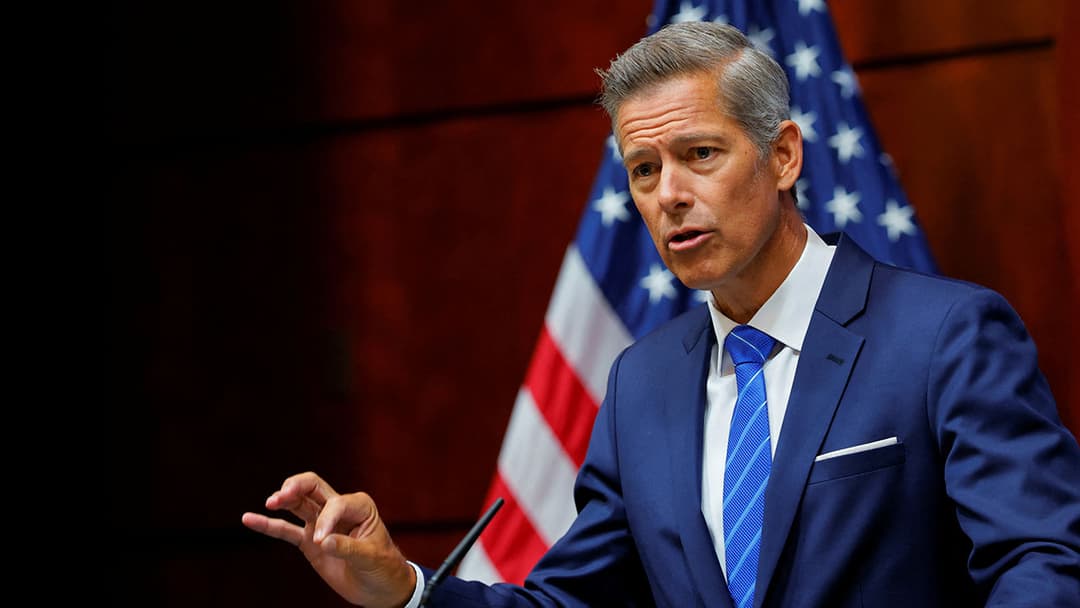
"Restoring supersonic flight over land isn't just about speed, it's about unleashing American innovation and ushering in a Golden Age of Travel," said Transportation Secretary Sean Duffy.
FASTER-THAN-SOUND PASSENGER FLIGHTS COULD SOON RETURN TO US SKIES AFTER KEY HOUSE VOTE
"Thanks to President Trump's leadership, we are working at lightning speed to safely enable the next quantum leap in aviation technology and deliver an exciting new way to fly to the American flying public," Duffy added.
The FAA is planning to finalize both rules by mid-2027.
Supersonic flights travel at speeds at or above Mach 1, flying at about 770 miles per hour or more. By contrast, commercial airliners generally fly between 550 and 600 miles per hour, giving supersonic aircraft a speed edge that can reduce travel times.
NASA ASTRONAUTS COULD SOON WEAR PRADA AS LUXURY LABEL UNVEILS NEW GEAR FOR ARTEMIS IV
Civilian flights in the U.S. have been prohibited from operating at speeds above Mach 1 over land in the U.S. under an FAA rule meant to protect the public from the impact of sonic booms, which can present noise issues at ground-level and may damage windows.
Technological advancements have led to a new flight technique called Mach cutoff, which the FAA explained uses the aircraft design, atmospheric conditions, speed and altitude to work together to make the sonic boom bend and refract up into the atmosphere – significantly reducing the ground-level impact in the process.
US IS 'AHEAD' OF CHINA IN SUPERSONIC JET AIRCRAFT, SAYS BOOM SUPERSONIC CEO
"Advances in aerospace engineering, materials science, noise reduction, and new operational concepts will eliminate the old sonic boom," said FAA Administrator Bryan Bedford. "This means we can ultimately repeal the ban from the 1970s on supersonic flight over U.S. territory while minimizing noise impacts to residents in communities along the route and near airports."
While the newly proposed regulations would apply to domestic supersonic flights, the FAA is also working with its regulatory counterparts from around the world to develop frameworks that could enable supersonic aircraft to serve international flights.
GET FOX BUSINESS ON THE GO BY CLICKING HERE
A year ago, President Donald Trump signed an executive order that called for the FAA to secure safety aviation agreements with foreign aviation regulators to allow for the safe international operation of supersonic aircraft.