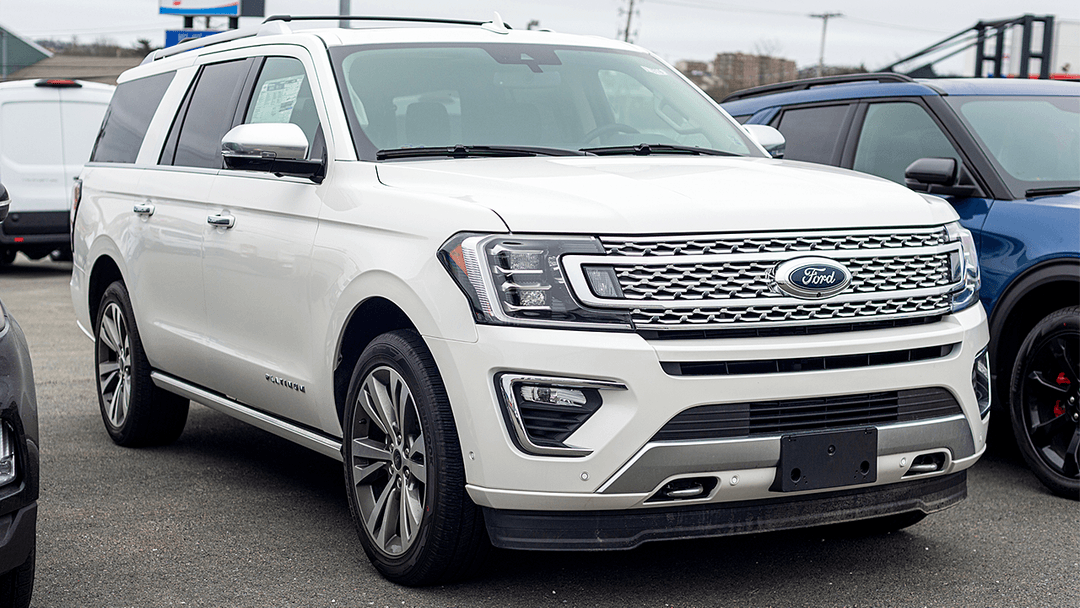
Ford is recalling more than 548,000 vehicles over a center console defect that could cause injury to the occupants, according to the U.S. National Highway Traffic Safety Administration.
The recall affects certain 2018-2024 Ford Expedition vehicles, the federal regulator said Thursday. A total of 548,463 vehicles are affected by the recall.
The center console's chrome plating may bubble and peel over time, potentially leading to sharp edges, the regulator said. Passengers who come into contact with the sharp edges face an increased risk of injury.
KIA RECALLS 6K VEHICLES DUE TO POSSIBLE SEAT BELT DEFECT THAT COULD RAISE INJURY RISK
"A customer may come in contact with the sharp edge of peeling chrome while driving, increasing the risk of injury," the NHTSA report reads.
The NHTSA said the defect may have been caused by the center console chrome trim that was manufactured by a supplier using parameters that failed to meet Ford's specifications.
The manufacturers listed in the regulator's report are automotive parts suppliers Xin Point and Forvia.
According to the recall report, Ford identified a trend in the NHTSA's Vehicle Owner Questionnaires (VOQs) in September about the bubbling and peeling of chrome trim on the center console of 2019-2020 model-year Ford Expedition vehicles.
"Five of the six reported VOQs allege customer hand injuries from contact with the sharp edge of the peeling chrome trim," the report reads.
Ford said it is aware of one accident and 65 injuries in connection with this issue.
MORE THAN 1 MILLION JEEP VEHICLES RECALLED OVER FIRE RISK AS OWNERS WARNED NOT TO PARK INSIDE
"Customer reports of hand and finger lacerations associated with this condition include a small number of instances stating that professional medical attention was required," the report says.
GET FOX BUSINESS ON THE GO BY CLICKING HERE
Customers affected by the recall will be able to go to a Ford dealer to have their vehicles inspected, and center consoles replaced as necessary, at no cost.
Notification letters about the safety risk are expected to be mailed out on June 29.
Additional letters will be sent in January of next year "once the remedy is available," according to the NHTSA.